








Central Air vs. Ductless Mini-Splits: Choosing the Right Cooling System for Your Home
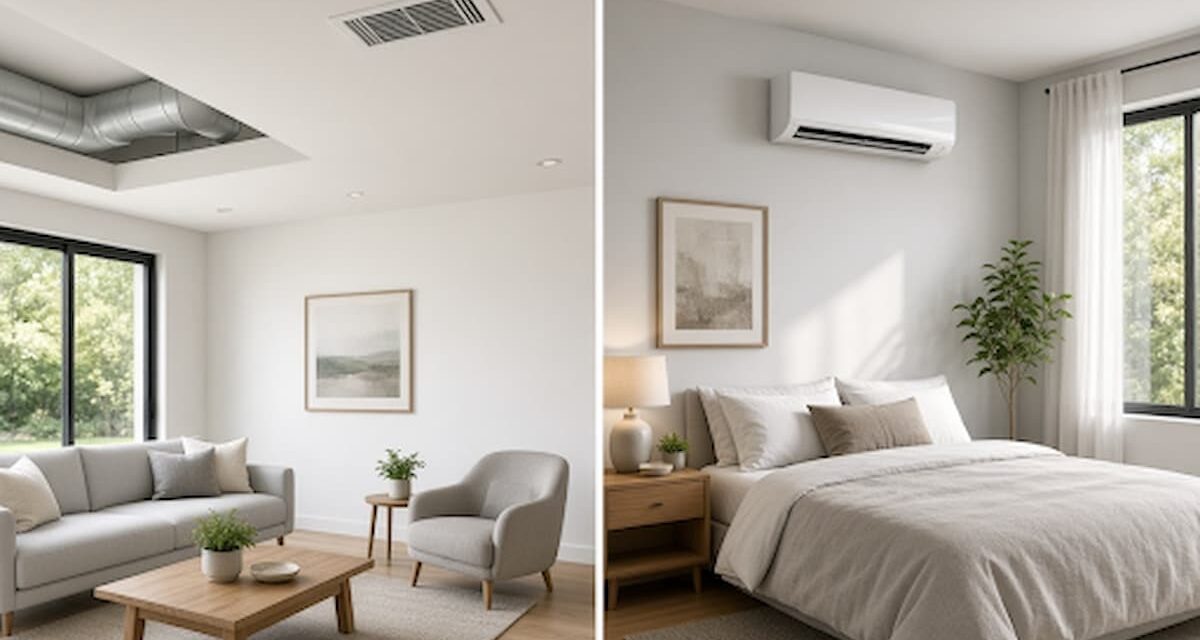
No single cooling system works perfectly for every house. Central air conditioning and ductless mini-splits each solve different problems, and the better choice depends on your home’s layout, existing infrastructure, and how you use the space.
Central systems rely on ductwork to move cooled air throughout the house. Ductless mini-splits deliver conditioned air directly into individual rooms through wall-mounted or ceiling units connected to an outdoor compressor. Understanding the strengths and limits of each option helps you avoid costly mismatches and choose equipment that actually fits your property.
How Central Air Conditioning Works
A central air system uses a single outdoor condenser and an indoor air handler or furnace to cool air, then pushes that air through a network of ducts to supply vents in each room. Return vents pull air back to be recooled. When the ductwork is properly sized, sealed, and insulated, the system can maintain consistent temperatures across the entire home with one thermostat.
Central air suits homes that already have ducts in good condition. It keeps wall space clear and can feel seamless once installed. The main drawbacks appear when ducts are leaky, poorly insulated, or missing entirely. In those cases, efficiency drops and some rooms stay warmer than others.
How Ductless Mini-Splits Work
A ductless mini-split system pairs one outdoor unit with one or more indoor air handlers. Refrigerant lines and a small condensate drain run through a modest wall opening—usually only a few inches wide. Each indoor unit cools (and often heats) its own zone and has its own controls.
This setup shines in homes without ducts, in room additions, or anywhere you want independent temperature control. Because there are no ducts, energy losses from air leaks are largely eliminated. The indoor units are visible, though modern designs are slim and relatively quiet.
Installation Requirements and Existing Ductwork
If your home already has well-sealed, adequately sized ducts, central air is often the simpler and more cost-effective path. Adding or replacing a central system in a ducted house usually involves less disruption than running new refrigerant lines to multiple rooms.
Homes without ducts—older properties, converted spaces, or new additions—face a different calculation. Installing full ductwork can require opening walls and ceilings, which raises cost and mess. Mini-splits avoid that work. A single outdoor unit can support several indoor heads, making them practical for whole-house cooling without major construction.
Professional load calculations matter more than nameplate capacity. An oversized system short-cycles, reduces comfort, and wastes energy. An undersized one struggles on the hottest days. A qualified contractor should perform a proper Manual J load calculation rather than simply matching square footage.
Zoning, Efficiency, and Comfort
Central systems typically operate as one large zone controlled by a single thermostat. Zoning dampers can be added, but they increase complexity and cost. Mini-splits provide built-in zoning: each indoor unit runs only when needed. This is especially useful in multi-story homes, rooms with different sun exposure, or households where people prefer different temperatures.
On efficiency, well-designed mini-splits often edge out older central systems because they avoid duct losses and use inverter-driven compressors that adjust output precisely. High-efficiency central systems with good ductwork remain competitive, particularly when paired with a modern heat pump. Both technologies have improved significantly; the difference now depends more on installation quality and the specific models chosen than on the category itself.
Aesthetics, Noise, and Maintenance
Central air keeps equipment mostly out of sight. Supply and return vents are the only visible elements inside the house. Mini-split indoor units mount on walls or ceilings and are noticeable, though many homeowners find the clean lines acceptable once they experience the comfort benefits.
Noise levels have dropped for both. Outdoor condensers for either system can be quiet when properly sized and placed. Indoor mini-split heads are generally very quiet on low speeds. Central systems move air through ducts, which can produce some sound at the registers.
Maintenance for central air centers on filter changes, coil cleaning, and duct inspection. Mini-splits require regular cleaning of the indoor unit filters and occasional professional servicing of the outdoor unit and refrigerant lines. Neglecting either system shortens equipment life and raises energy use.
Upfront Costs and Long-Term Operating Considerations
Central air often costs less to install in a home that already has usable ducts. The price rises sharply if extensive duct modifications or new runs are needed. Mini-splits usually carry a higher equipment cost per ton of cooling, but the installation can be less invasive and therefore less expensive in ductless homes.
Operating costs depend on efficiency ratings, local electricity rates, climate, and how the system is used. Zoning with mini-splits can lower bills in homes where only certain rooms need cooling much of the time. Central systems may prove more economical in houses that require whole-home cooling for long periods.
Where Other Options Fit
Window units and portable air conditioners serve single rooms or temporary needs. They are inexpensive to buy and require no permanent installation, but they are less efficient, noisier, and less attractive for long-term use. Heat pumps—both ducted and ductless—add heating capability and are increasingly popular in milder climates or as replacements for older air conditioners. They belong in the same decision process when year-round comfort is the goal.
Real-World Scenarios
An existing family home with sound ductwork usually benefits from a high-efficiency central system or a ducted heat pump. An older house without ducts, or one with failing ductwork, often makes more sense with a multi-zone mini-split. A new room addition can be cooled effectively with a single mini-split head without extending the main system. Homes that need independent control for bedrooms, a home office, or a finished basement gain flexibility from ductless zoning.
Frequently Asked Questions
Which system is more energy efficient?
Both can be highly efficient when properly sized and installed. Mini-splits often have an edge in homes without ducts because they avoid air leakage losses. A modern high-SEER central system with sealed ducts performs very well too. Look at the specific efficiency ratings and your home’s characteristics rather than assuming one category always wins.
Can mini-splits cool an entire house?
Yes. A multi-zone system with one outdoor unit and several indoor heads can handle whole-house cooling. The number of heads and their capacity must match the calculated load for each area.
Is central air quieter than mini-splits?
It depends on the equipment and installation. Both can be very quiet. Mini-split indoor units are typically near-silent on low fan speeds. Central systems may produce more air movement sound at the vents, while outdoor noise levels are comparable when units are properly placed.
How long do these systems last?
With regular maintenance, both central air and mini-split systems commonly last 12–20 years. Outdoor units and compressors are usually the components that determine lifespan. Clean filters and professional tune-ups make a noticeable difference.
Do I need ducts for a heat pump?
No. Heat pumps are available in both ducted (central) and ductless mini-split versions. The same decision factors—existing ductwork, zoning needs, and installation impact—apply.
Conclusion
Choosing between central air and ductless mini-splits starts with an honest look at your home’s ductwork, layout, and cooling patterns. Central systems deliver whole-house comfort with minimal visual impact when ducts are already in good shape. Mini-splits provide efficient, zone-by-zone control and avoid the cost and disruption of new ductwork. Professional sizing and quality installation matter more than the technology label. Evaluate your specific property, consider both immediate and long-term costs, and select the system that matches how you actually live in the space. The right choice delivers reliable comfort without unnecessary expense or compromise.